
Some work begins before you have language for it. Dr. Sherry Congrave Wilson encountered restorative ways of being long before she knew the term restorative justice.
Years ago in East Africa, she heard elders describe how their community responded when a child caused harm. Before speaking of what the child had done, they gathered around and named what the child carried—their strengths, their gifts, their goodness.
The harm mattered. But it was never allowed to become the whole story of who that child was.
That understanding stayed with her. Long before she encountered restorative justice in a classroom or textbook, she had witnessed its principles in communities and relationships across the world.
Those teachings were not hers to claim, but to learn from. They shaped an approach grounded in respect, relationship, and responsibility—and a commitment to learning from communities without extracting from them.
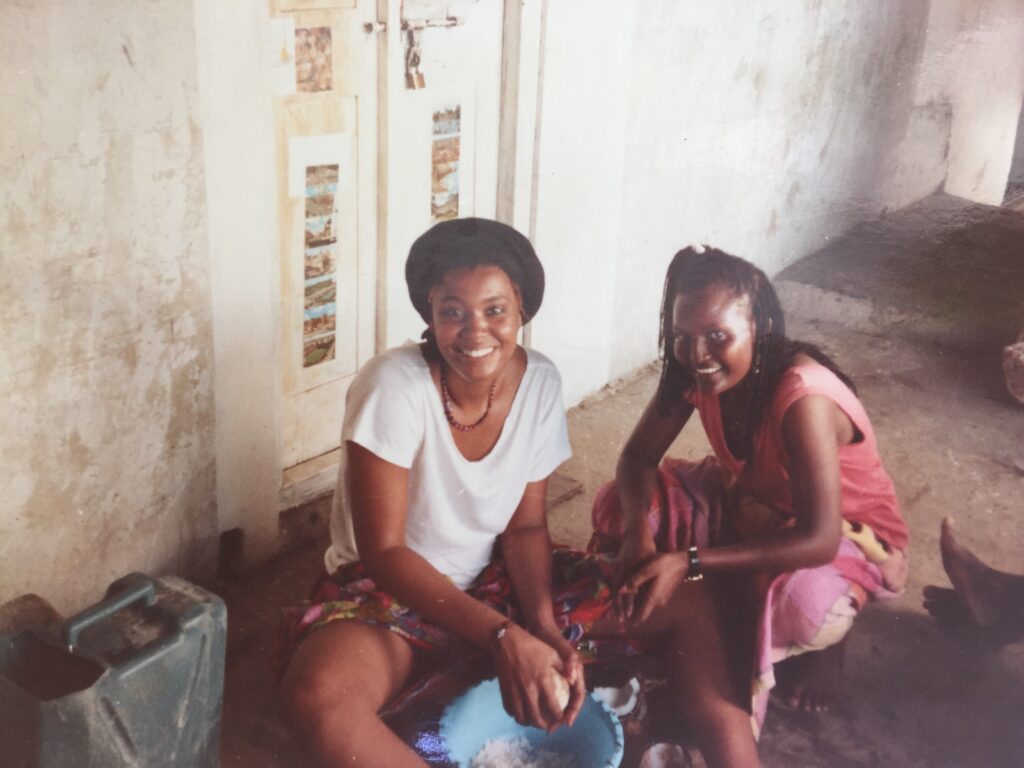
Long before TTP Global, Dr. Sherry’s understanding of community was shaped by learning across cultures and contexts. After graduating from UC San Diego, she studied at the University of Nairobi and traveled independently throughout eastern, central, and southern Africa. Later experiences took her into schools in Japan, Hong Kong, and China and into community health work alongside scientists and local communities in Cameroon.
These experiences raised questions that would follow her for decades: How do communities hold people through conflict? What creates belonging? And what allows people to repair harm without losing their dignity or connection to one another?
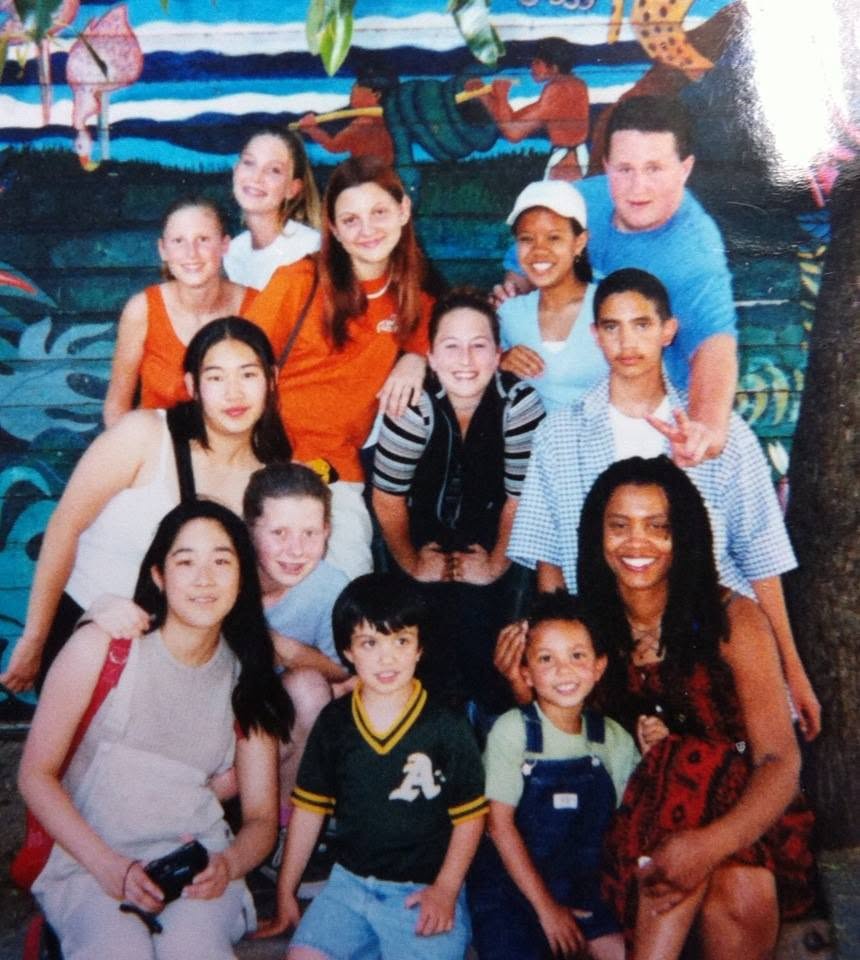
Dr. Sherry brought those questions into the classroom. For more than a decade as a social studies teacher, she taught World History, Ethnic Studies, U.S. History, Women’s Studies, and other courses, with particular attention to race, identity, power, and the humanity of young people too often marginalized by educational systems.
Her doctoral research later deepened that inquiry through a study of African-centered Black critical pedagogy and an educational practice grounded in racial identity, cultural affirmation, and the belief that every child carries wisdom worth protecting.
Restorative justice eventually gave her a practice and language for many of the ideas she had been pursuing throughout her career. At SEEDS Community Resolution Center, she ultimately served as School Services Director, leading restorative justice work with Bay Area schools through training, coaching, mediation, and long-term partnership.
In June 2023, SEEDS laid off the School Services team—and nearly the entire organization—with just 28 days’ notice that their employment and services would end. The schools and communities the team had been serving, however, still needed support.
Within weeks, Dr. Sherry and several former School Services practitioners came together to create The Town Project, a nonprofit committed to continuing that work and honoring the relationships they had built. Over the next three years, The Town Project trained educators, mediated conflicts, supported young people, and partnered with schools and communities across California.
During the final chapter of The Town Project, Dr. Sherry began drawing together threads she had been carrying for years: restorative justice, education, emergent strategy, biomimicry, the intelligence of living systems, and decades of learning across cultures and communities. As The Town Project approached the end of its organizational life and TTP Global took shape, those threads became the Restorative Ecological Model™ (REM).
REM now provides the theoretical foundation for TTP Global: an understanding that lasting transformation is not created by imposing solutions on people, but by cultivating the conditions in which people, relationships, and communities can repair, adapt, and thrive.
Some things have a name before you understand them. Others you live for decades before the name finally arrives.
Dr. Sherry Congrave Wilson has been practicing restorative justice her entire adult life. She just didn’t always have words for it.
She remembers hearing elders in East Africa describe how their community held a child who had caused harm. They would walk around that child in a circle — not to confront, not to punish — but to name aloud every good thing that child carried. Every strength. Every gift. Only after that did they speak of the harm done.
That is restorative justice. Dr. Sherry encountered it in the world — in community, in practice — long before she encountered it in any classroom or textbook.
These experiences were not hers to claim — they were teachings she was allowed to witness. From early on, she understood that restorative practices are rooted in Indigenous and community-based traditions across the world. This work has always required respect, relationship, and responsibility — not extraction. That understanding continues to shape how she approaches the work today.
She returned home and earned her California teaching credential in 1993 in San Diego, California. For the next thirteen years she taught Social Studies — World History, Ethnic Studies, U.S. History, Developmental Psychology, Women’s Studies — at schools in San Diego and across the Bay Area. She was always the teacher who named what other teachers walked past. Race. Identity. Power. The full humanity of students the system had already written off.
She kept studying how the world held its children. In 2002 she traveled to Japan as a Fulbright Memorial Fund Fellow, visiting schools and learning how another culture understood education and community. In 2003 she went to Cameroon with Earthwatch, working with villagers on a community health project. In 2007 she studied schools in China on a Chris Larsen Fellowship at the University of Hong Kong.
In 2018 she completed her doctorate at Mills College. Her dissertation — a case study of an African-centered Black critical pedagogue — examined how one extraordinary teacher built an educational practice rooted in racial identity, cultural affirmation, and the belief that every child carries wisdom worth protecting. It was in that research that she saw most clearly what restorative justice could be — not a set of tools, but a complete reorientation toward the humanity of young people.
She found formal restorative justice practice through SEEDS Community Resolution Center in Berkeley and brought that training into her work with California schools. In 2021 she joined SEEDS as School Services Director, bringing restorative justice directly into Bay Area schools through training, coaching, and mediation. When SEEDS laid off staff in June 2023, she was in mid-partnership with several schools that still needed support.
She didn’t walk away. Together with a group of fellow SEEDS practitioners, she founded The Town Project (TTP) that same year — staying accountable to the schools and communities already in the work with her. TTP spent the next two years building something real: training educators, mediating conflicts, mentoring youth, and serving school districts across California.
It was during this period that Dr. Sherry began drawing together threads she had been carrying for years — the study of emergent strategy, the principles of biomimicry, the intelligence of living systems. She started to see what she had always intuited: that communities function like ecosystems. That health emerges from interconnection, not control. That repair requires conditions, not just process.
From that synthesis she developed the Restorative Ecological Model — REM — her original framework for understanding communities as living systems: interconnected, layered, and capable of regeneration when the conditions are right. REM became the theoretical spine of everything that followed.
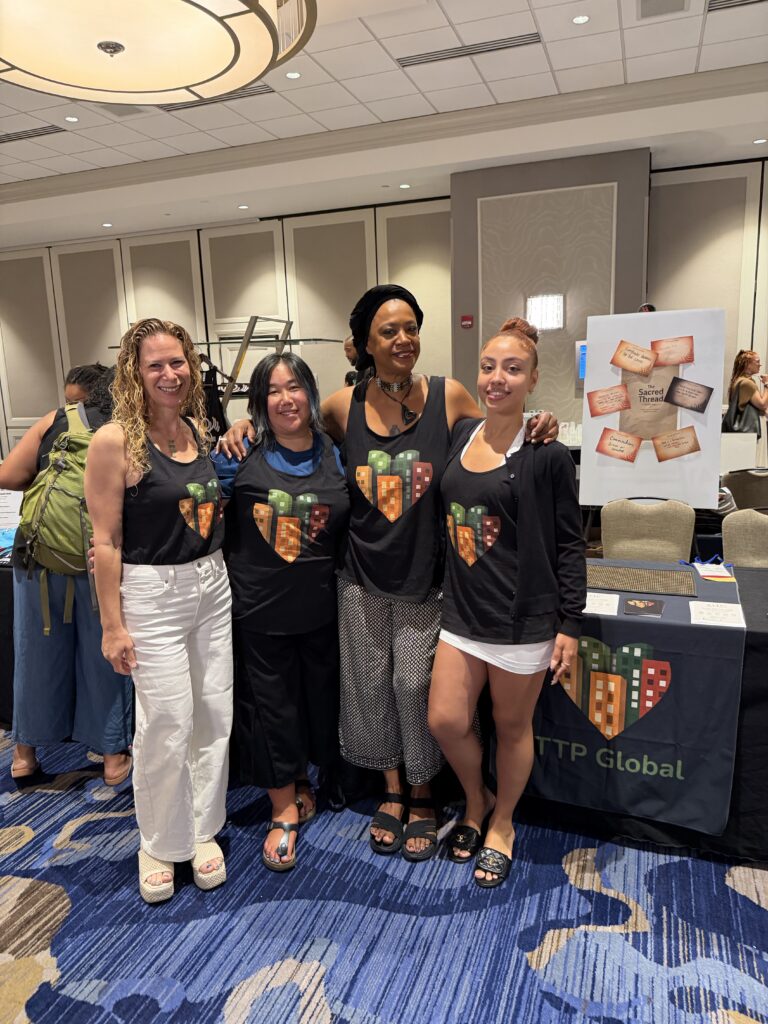
TTP Global now carries this work into a new chapter. Guided by the Restorative Ecological Model™, we partner with schools, organizations, and communities to strengthen relationships, repair harm, and create conditions where people can thrive.
The learning continues across borders, through relationships in Aotearoa (New Zealand), experiences in Fiji, and an emerging chapter in Vietnam—deepening a practice shaped by curiosity, reciprocity, and respect for the wisdom communities already hold.
TTP Global is rooted in decades of learning—and still evolving.