The Restorative Ecological Model (REM)™
The Restorative Ecological Model (REM)™ is the framework that guides all of our work.
It is not a program, and it is not limited to moments of conflict.
We use it to shape how communities are built, how people communicate with one another, and how systems are supported over time.
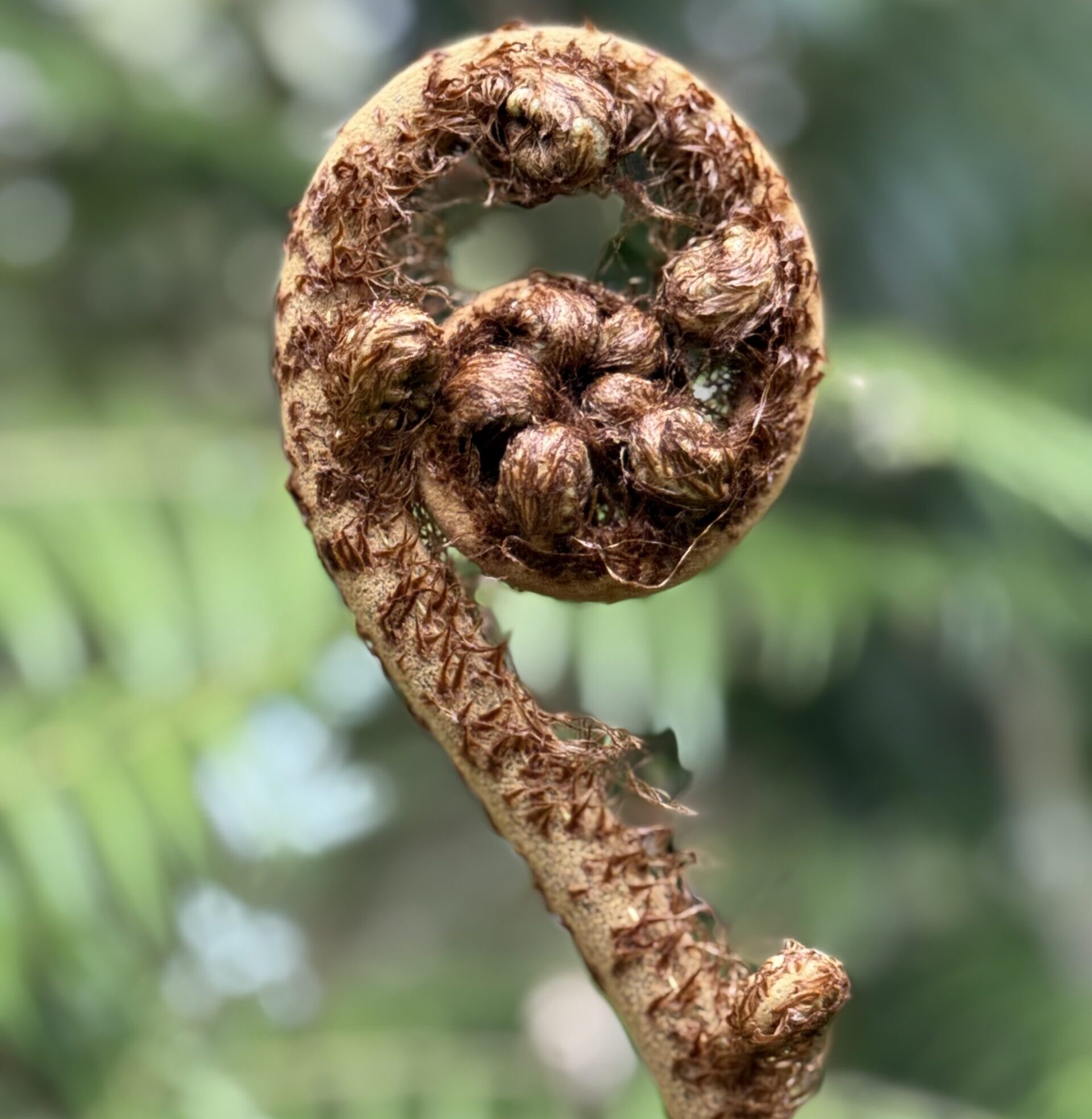
REM is informed by both biomimicry — the practice of learning from living systems — and the Indigenous traditions from which restorative practice originates.
Whether we are working in schools, supporting youth mentorship, or facilitating restorative conflict mediation in organizations, we approach the work through this ecological lens.
A Different Starting Point
Restorative work does not begin with repair. It begins with community building.
Not as a strategy — but as a way of creating spaces where people feel connected, seen, and accountable to one another.
When relationships are strong, communication is more honest. When communication is honest, trust can develop. And when trust is present, communities are better able to navigate difficulty when it arises.
At TTP Global, community building is not a preliminary step or a separate phase. It is the ground the work stands on.
Why Ecology
In a healthy ecosystem, nothing exists in isolation. Conditions shape outcomes. Human systems function the same way.
This understanding is grounded in biomimicry — learning from how living systems sustain balance, adapt to stress, and regenerate over time. It is also rooted in Indigenous ways of knowing, where relationship, interdependence, and responsibility to community are central.
Classrooms and organizations are influenced by:
Emotional safety
Patterns of communication
Identity and power
Shared expectations and norms
When these conditions are aligned, people are more connected and responsive to one another. When they are not, disconnection and conflict increase. An ecological perspective helps make those conditions visible — so they can be intentionally shaped.
The Three Integrated Capacities
Our work brings together three areas that are often treated separately:
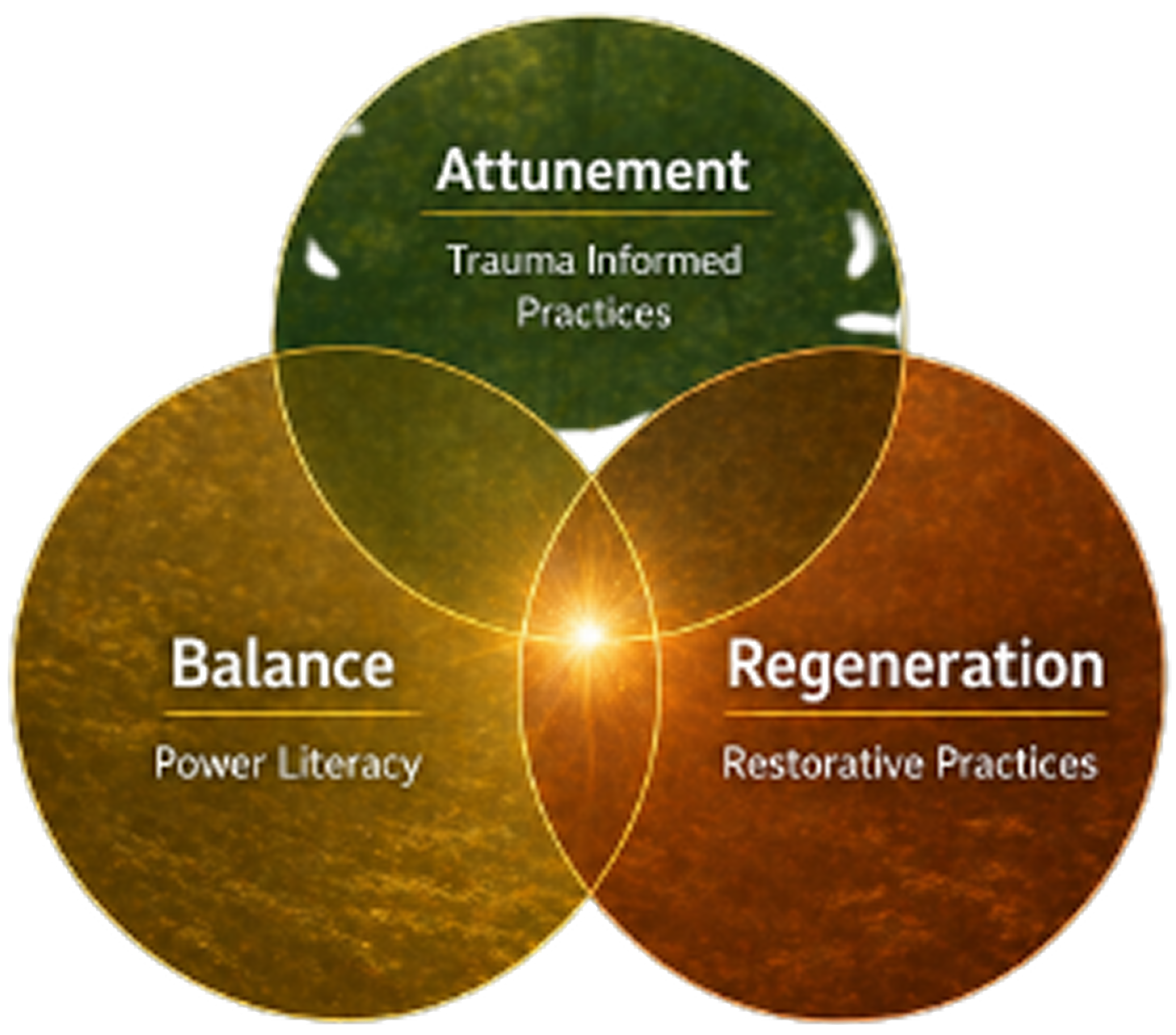
Attunement — Trauma-Informed Practice
Understanding how people experience safety, stress, and connection, and responding in ways that support regulation and participation.
Balance — Power Literacy
Recognizing how identity, role, and systemic inequities shape interactions, and working toward more equitable and accountable relationships.
Regeneration — Restorative Communication & Circle Practice
Using structured, relational practices to build community and address harm. This includes circle practice for connection and shared understanding, restorative communication for navigating tension, and mediation when deeper repair is needed.
Community Before Crisis
Restorative practices are often introduced as a response to harm. We use them to shape how a community functions every day.
Through circle practice and restorative communication, communities develop:
Shared language
Stronger relationships
Clearer expectations
A sense of belonging and responsibility
Strong community changes what is possible. When trust, connection, and shared understanding are built over time, people experience belonging, communicate more honestly, and take greater responsibility for one another.
In these conditions, harm becomes less frequent. And when it does occur, there is something to return to — a foundation strong enough to support real repair.
How This Shows Up in Practice
We do not apply one model in every situation. Instead, we work in response to the conditions of each system.
Across schools, youth programs, and organizations, this often means:
Beginning with listening rather than immediate intervention
Strengthening communication before addressing conflict
Using circle practice to build connection and shared norms
Supporting restorative communication as an everyday practice
Pacing mediation processes to ensure safety and readiness
In conflict mediation, this may involve slowing down before bringing people together — so that the process supports meaningful, lasting outcomes rather than quick resolution.
What Makes This Different
Restorative practices are widely used, but they are often introduced as tools or responses to specific incidents.
Our work focuses on how people relate to one another on a daily basis.
REM brings together trauma-informed practice, power literacy, and restorative communication within an ecological framework informed by both living systems and Indigenous traditions.
This is not something we apply in isolated moments. It is how we approach the work as a whole.
We do not begin with conflict. We begin with community. And from there, everything else becomes possible.