
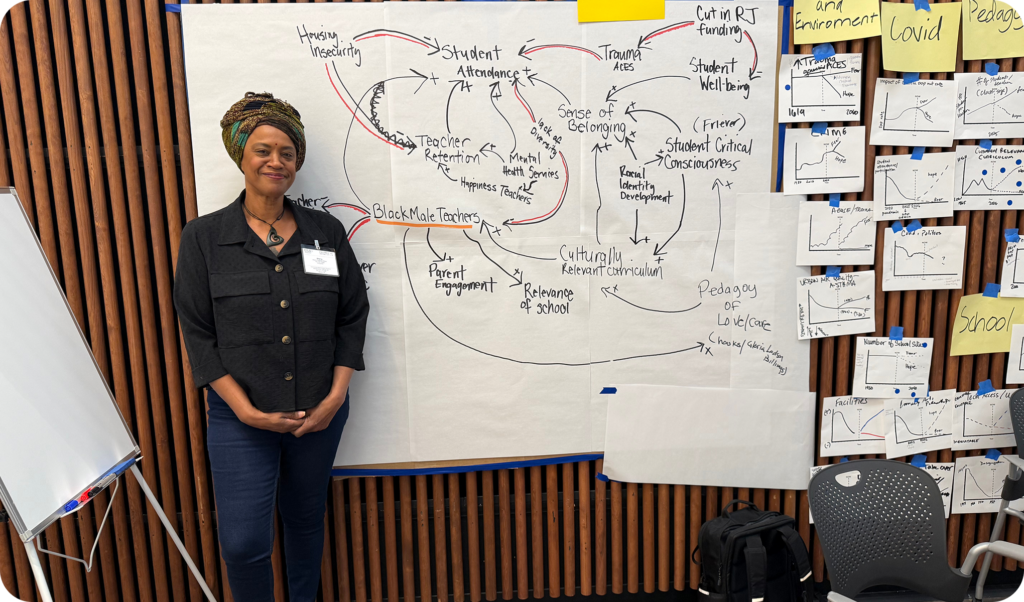
TTP Global’s work has always been grounded in the understanding that organizations are living systems. Relationships, leadership, policies, culture, history, power, and community conditions interact with one another. Meaningful change requires us to understand those relationships rather than treating challenges as isolated problems.
That commitment is now being strengthened through continued learning in Community-Based System Dynamics (CBSD).
Dr. Sherry Congrave Wilson recently completed an intensive Community-Based System Dynamics Workshop and Learning Lab facilitated by Donald Martin, Jr., CEO of the Global Institute for the Learning Society, alongside a multidisciplinary team of systems researchers and practitioners. The experience focused on using systems thinking and system dynamics to develop a deeper understanding of complex community and organizational challenges.
Participants worked with tools for examining patterns over time, mapping causal relationships and feedback loops, and looking beneath visible problems to understand the structures and systems helping to produce them. The workshop also emphasized something deeply aligned with TTP Global’s approach: communities closest to complex societal problems hold essential knowledge about the systems affecting their lives.
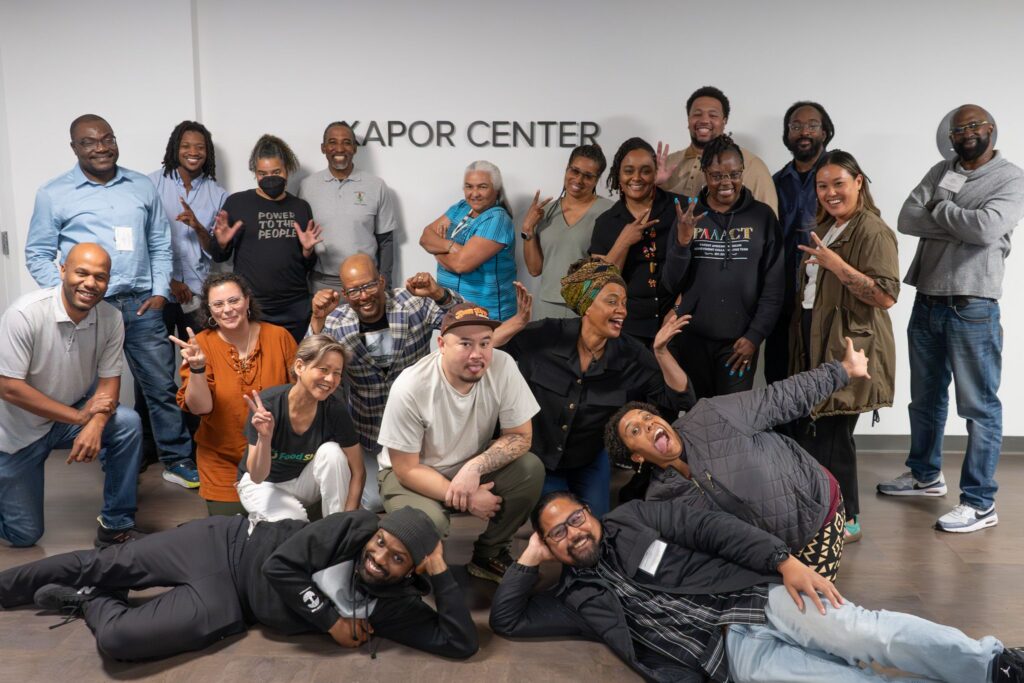
The formal workshop has ended, but the learning has not.
Donald Martin now hosts a monthly learning community where cohort members continue applying systems methodology to real organizational and community projects. Dr. Sherry participates in these ongoing gatherings as part of TTP Global’s continued investment in learning, experimentation, and methodological development.
Recent meetings have included deeper work with causal loop diagrams and systems visualization, exploration of how artificial intelligence might assist with aspects of systems modeling while still requiring human interpretation and verification, and opportunities for participants to share how they are applying the methodology within their own organizations. The group has also established a recurring project spotlight, creating dedicated time each month for participants to bring live work to the community for feedback, questions, and collaborative problem-solving.
For TTP Global, the possibilities are significant.
Community-Based System Dynamics offers another way to help schools, districts, and organizations move beyond surface-level solutions and ask deeper questions: What is producing the pattern we are seeing? What relationships are reinforcing it? Whose experiences and knowledge have been included in our understanding of the system—and whose have been left out? What might change elsewhere when we intervene here?
These questions align closely with TTP Global’s Restorative Ecological Model™ (REM), which approaches restorative transformation through relationships, context, interdependence, power, regulation, and the broader ecosystems in which people live and work.
One area Dr. Sherry is particularly interested in exploring is whether Community-Based System Dynamics can eventually help TTP Global develop a formal systems map of REM—making visible some of the relationships, feedback loops, and conditions that contribute to healthy restorative ecosystems.
For TTP Global, professional learning is not separate from practice. It is part of how the practice continues to evolve.